

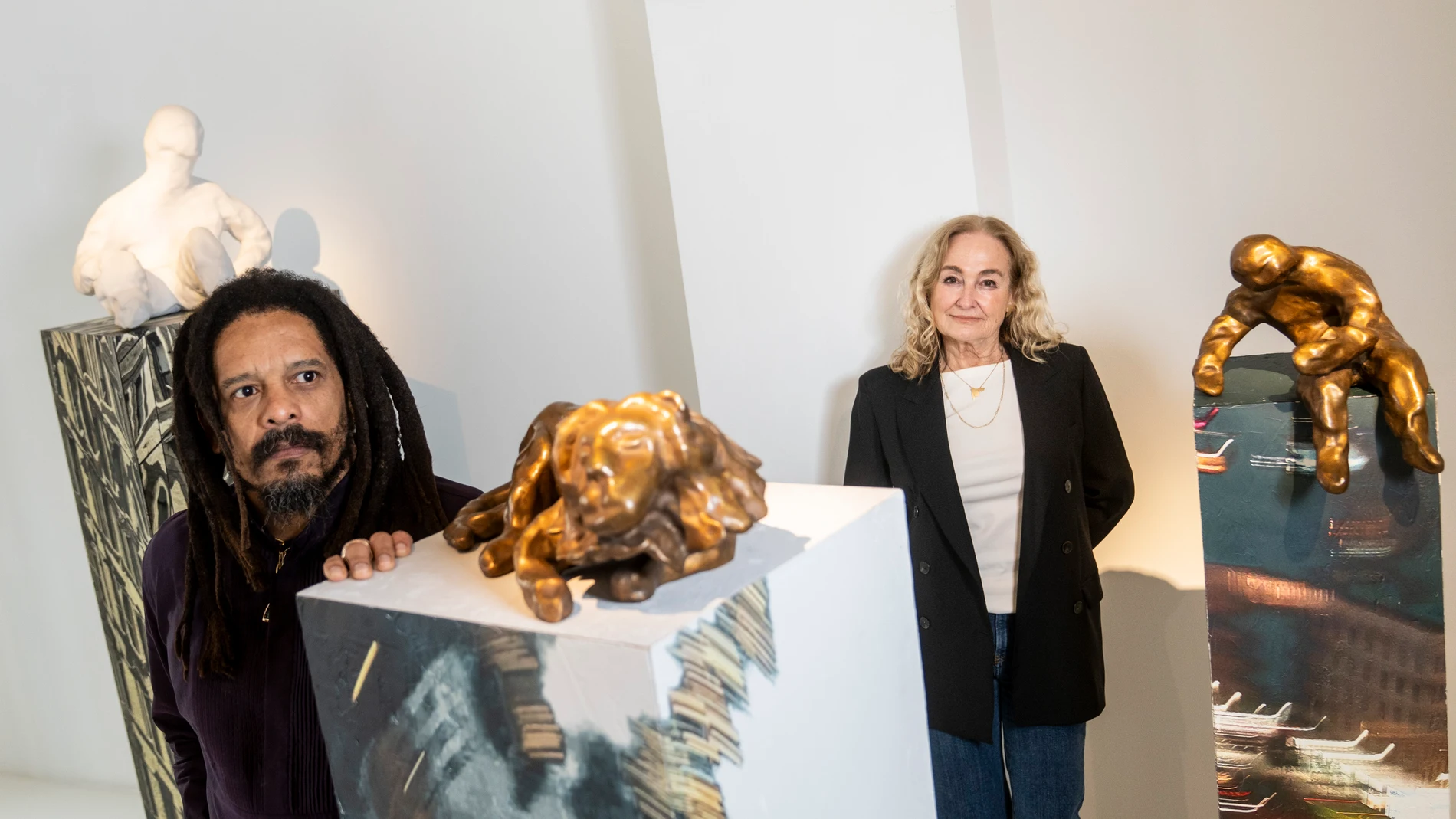
Rohan Marley, son of Bob Marley, co-headlines an art exhibition with artist Francesca Martí at Madrid's Gerhardt Braun Gallery, sharing his personal take on resilience and art.
Bob Marley's Legacy Reaches Madrid Through His Son
Anyone stopping by Madrid's Gerhardt Braun Gallery this spring, located in the heart of the city's Golden Mile, will notice something unexpected: the exhibit is set to the sound of reggae, Jamaica's most iconic musical genre. During a recent visit, "Crazy Baldhead" by Bob Marley & The Wailers was playing, though the gallery's curated playlist also includes 14th- and 15th-century Ethiopian music, a nod to Ethiopia's role in the origins of the Rastafari movement.
That choice isn't incidental. While it would be impossible to fully capture Bob Marley's cultural footprint in one space, the gallery comes close through his son, Rohan Marley, who is featured this season in a new exhibition that carries his own personal stamp.
A Lion Who Calls Himself a Dreamer
Rohan Marley isn't simply a supporting presence in this project — he brings an identity shaped by the Rastafari movement he was raised in. When describing himself, he chooses the image of a dreaming lion, referencing the animal long associated with Rastafari, a symbol that captures both his strength and his more reflective, spiritual side.
That same duality runs through "Resilience," the centerpiece project he co-created with Mallorcan artist Francesca Martí. His role goes far beyond a supporting one: the exhibit's central piece is a video artwork in which Marley shares his own worldview directly, shaped by his Rastafari upbringing and by the early loss of his father, who died when Marley was just 9 years old.
Reflecting on that experience, Marley has said his goal isn't to convey the pain of loss itself, but rather the strength and fragility that grow out of it — two forces he believes must be accepted in order to embrace one's own imperfection. That idea runs through much of his artistic outlook and gives "Resilience" both its title and its meaning.
How the Collaboration With Francesca Martí Began
Marley and Martí's connection began three years ago in New York, purely by chance: the two ended up seated next to each other at a hotel. After a brief conversation, she showed him her paintings, and he was immediately captivated by her work. Despite the language differences between them, the connection was instant — for Marley, communication isn't about the language spoken, but about sharing a common purpose.
What started as a seemingly minor encounter eventually grew into a two-year collaborative project: one year spent developing the concept, and a second spent bringing it to life. Marley didn't just lend his personal story to the piece — he also brought his own perspective on resilience as a central theme, one that now gives its name to one of the two works on view in Madrid.
The Backdrop: Francesca Martí's Work
The other half of the exhibition, "Passage," comes from Mallorcan visual artist Francesca Martí, who previously showed work at the same gallery in 2023 with "Lux." Blending painting and sculpture, "Passage" explores the balance between human activity and nature, revisiting recurring figures from her body of work such as the "Dreamers" (introduced in 2012) and the "Believers" (introduced in 2018) — the former shown seated in quiet reflection, the latter always in motion, at times even climbing the gallery's walls, where the exhibit runs through the end of May.
Though "Passage" and "Resilience" come from different creators, both share a hopeful outlook on the capacity to adapt — whether in the face of personal loss, as Marley explores, or in response to challenges in the natural and urban world, as Martí examines through pieces like the photograph "Anthill," which depicts an overcrowded housing block in Shanghai.
